
In-progressNext.jsTypeScriptPrisma+5 more
Bizylii
A retail and wholesale marketplace bringing Nairobi's Eastleigh traders online — vendor storefronts, product discovery, and orders in one place.
Timeline
Ongoing
Role
Full-Stack Developer
Status
In-progressTechnology Stack
Next.js
TypeScript
Prisma
PostgreSQL
Tailwind CSS
shadcn/ui
TanStack Query
better-auth
Key Challenges
- Modelling retail and wholesale pricing on the same catalogue
- Vendor onboarding, storefronts, and product moderation
- Bulk product import and media handling for non-technical sellers
Key Learnings
- Marketplace data modelling with Prisma
- Africa-focused integrations (SMS, local payments)
- Designing admin tooling for operations teams
Overview
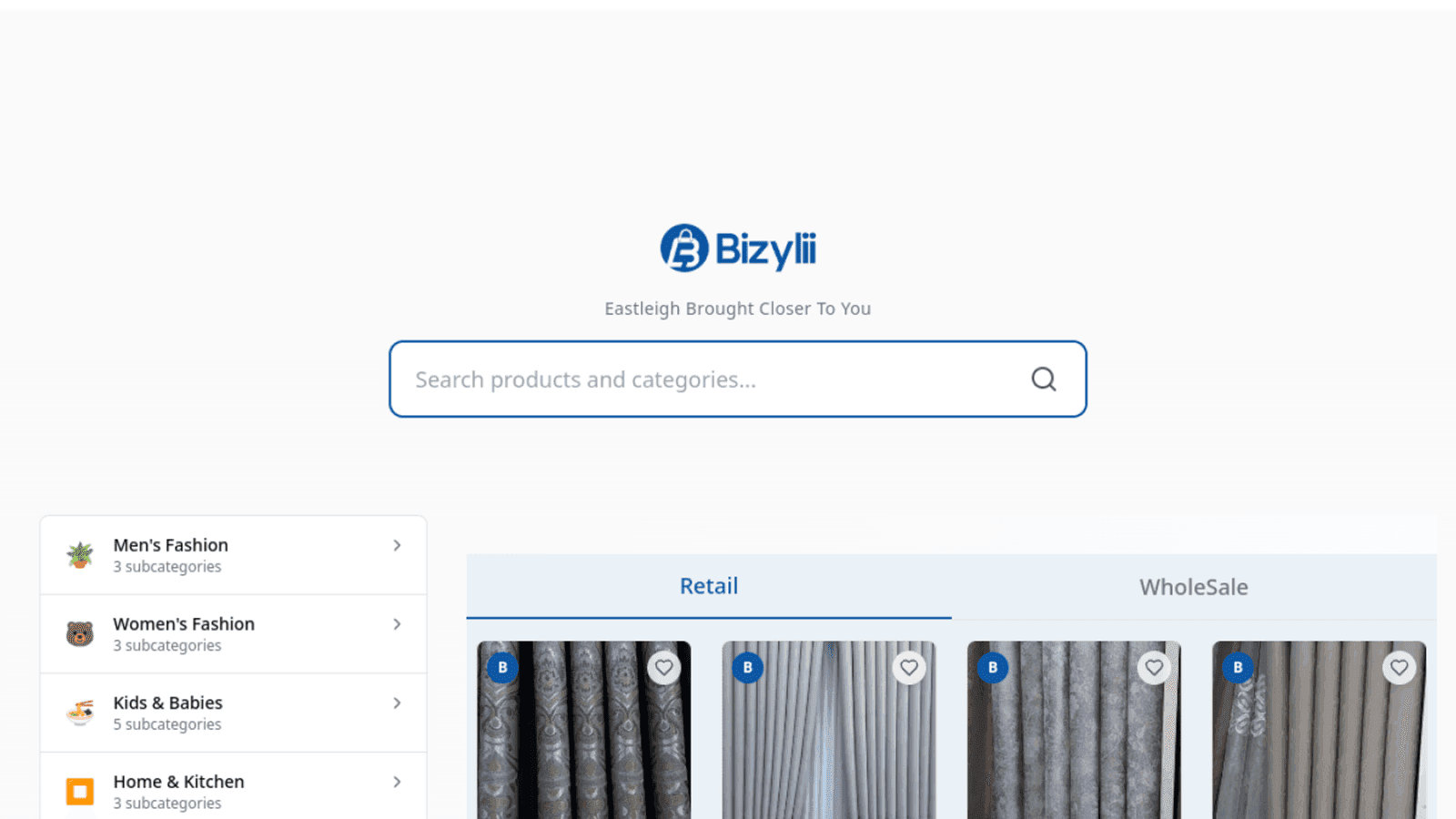
Bizylii — "Eastleigh Brought Closer To You" — is a marketplace that puts the traders of Nairobi's Eastleigh district online. Shoppers browse a single catalogue that switches between retail and wholesale pricing, while vendors get their own storefronts, product management, and order tools.
Key Features
Shopping Experience
- Unified retail / wholesale catalogue: one product list that re-prices itself depending on whether a buyer is shopping for themselves or for their own shop.
- Category-first discovery: a deep category tree (fashion, home & kitchen, electronics, phones, and more) with search across products and categories.
- Wishlists and product detail pages built for fast browsing on mobile data.
Vendor & Operations
- Vendor onboarding and storefronts: sellers register, get verified, and manage their own product listings and media.
- Bulk import: spreadsheet upload so vendors can move an existing inventory online quickly.
- Admin dashboards: moderation, catalogue oversight, and reporting for the operations team.
Technical Implementation
- Next.js & TypeScript across the storefront, vendor area, and admin.
- Prisma & PostgreSQL for the marketplace data model — products, variants, vendors, orders, and pricing tiers.
- better-auth for authentication and TanStack Query for data fetching and caching, with uploadthing handling product media.
- Region-specific integrations for SMS notifications and local payments.
Conclusion
Bizylii lowers the barrier for established physical traders to reach customers beyond their street, without asking them to become e-commerce experts.